
She Made Harry Eat…
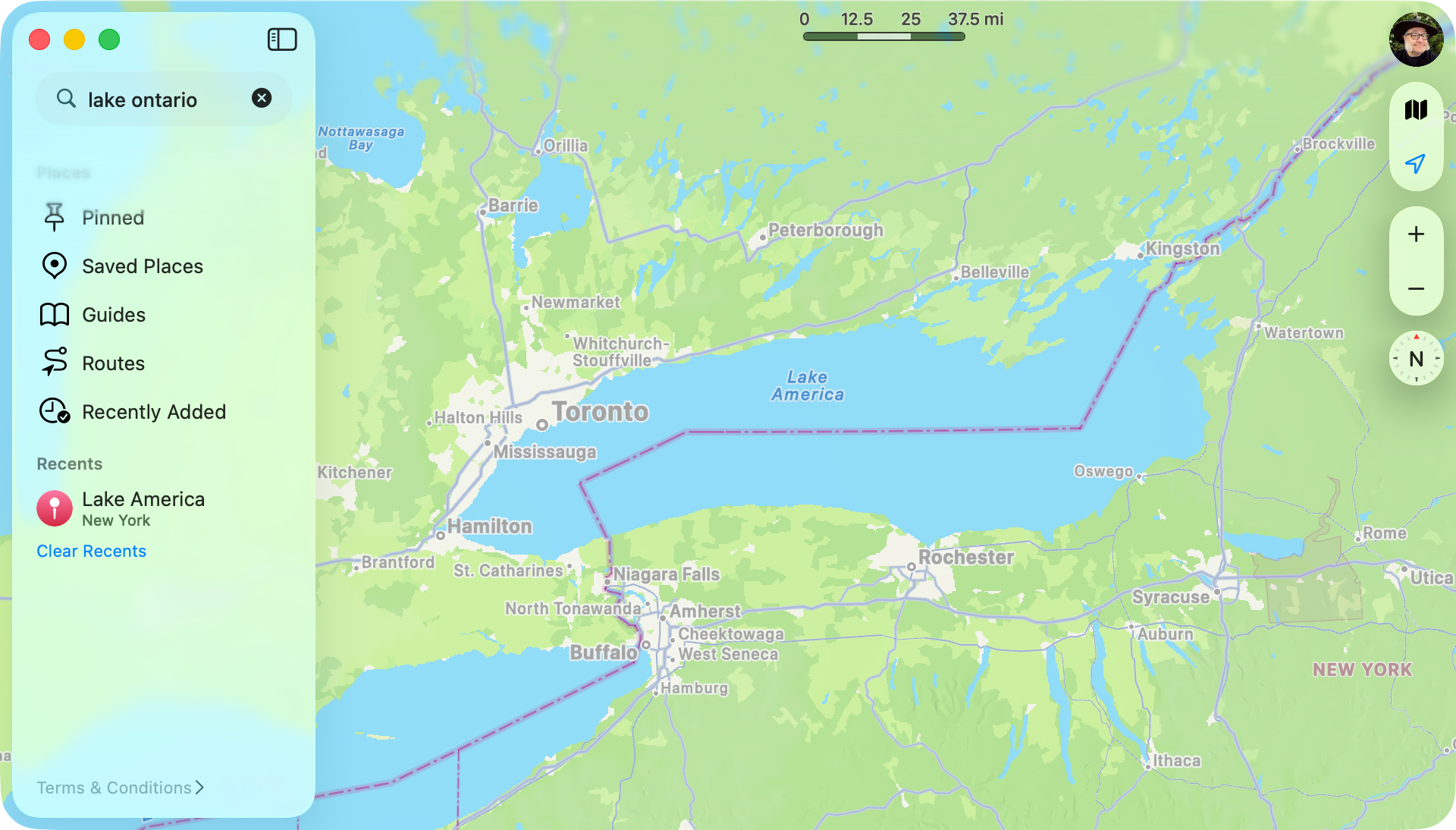
So. Not for the first time, Trump has decided that he has an issue with a body of water’s name that had remained peacefully undisputed for centuries, and he’s changed it by fiat. He’s gone and done this despite the precedent for such a White House order being as vague as any of the waves lapping at the shores of the Gulf Of Whatsit, or Lake Thingummy. It’s as vague as our understanding of exactly what letters are currently bolted to the side of the Center For The Arts that memorializes somebody or the other, behind all of those tarps…another name that Trump somehow couldn’t abide for even one second longer.
I suppose we can only be grateful (and a little surprised) that he didn’t rename Lake Ontario after himself.
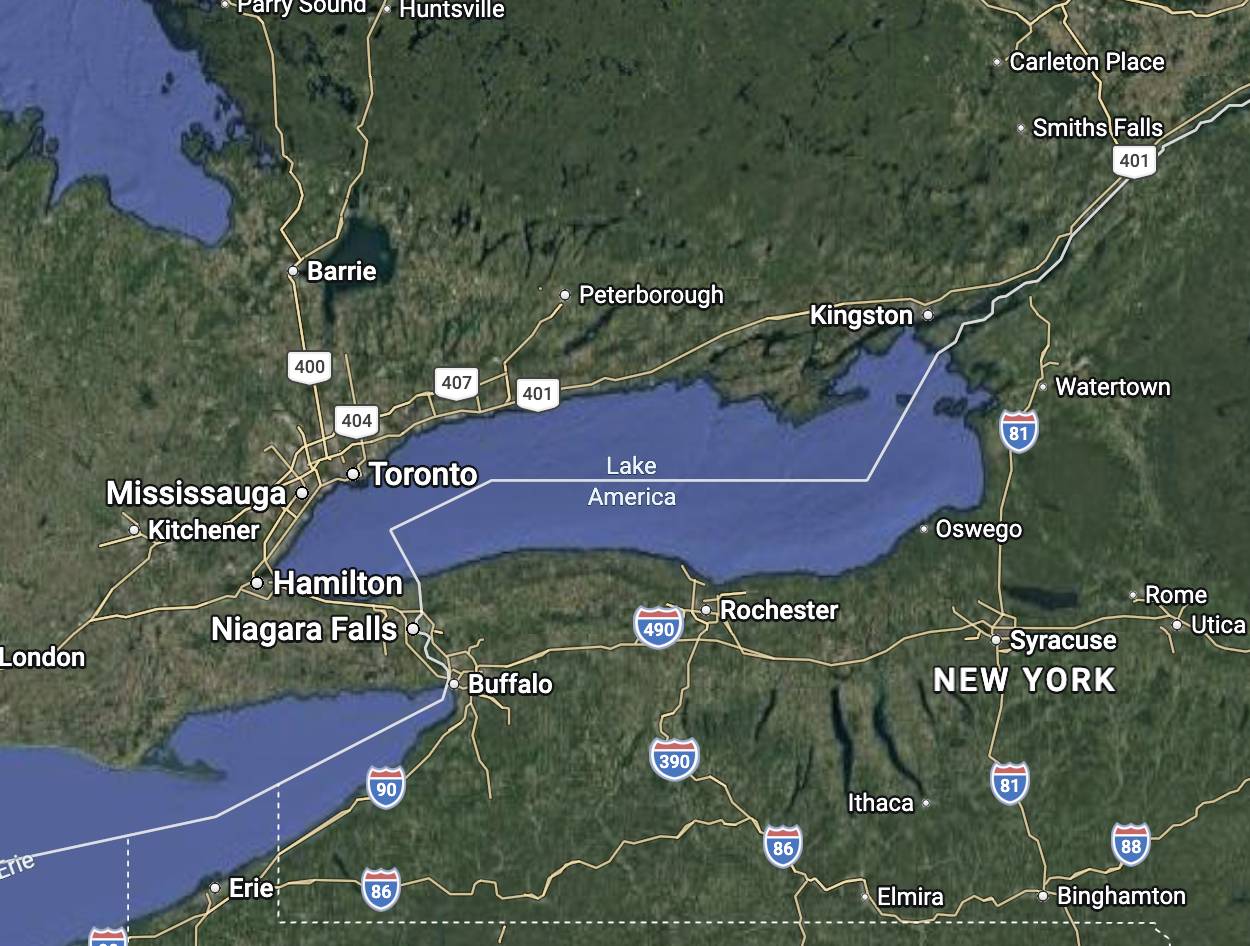
I’m certain of one thing: I won't give Google any grief for changing “Lake Ontario” in Google Maps to “Lake America.” I can’t say that Google’s move was politically motivated.
Google Maps has always taken a politically neutral position when it comes to placenames and borders. Whenever a bit of map data is disputed between two nations (or, in this case, between a real estate guy who cheats at golf and literally the entire rest of the world), Google Maps reflects the “truth” as defined (or regulated) by whichever country the Google Maps user is in at the time.
Thus:
- If you’re accessing Google Maps inside Japan, the body of water between Japan and the Koreas is the Sea of Japan. If you’re in South Korea, Google Maps labels the same area as the East Sea.
- Russia (illegally) annexed Crimea in 2014. Laws in Russia criminalize maps that dispute Russia’s claim of ownership of occupied territories. Inside Russia, Crimea’s borders show it as a part of Russia. Inside Ukraine, Google Maps draws the borders of the territory in the style of a state within Ukraine.
- And the thing between Taiwan and China is its own mess. In China, map data can only be published/distributed by entities approved by the government. Thus, maps.google.cn reflects the Chinese government’s views on Taiwan’s status.
Google has responded to the current Lake Inferiority Complex issue the same way they handled the Gulf of Rational Comprehension problem they faced last year. They’re not reacting to Trump’s executive order. But the EO resulted in a change to the name recorded by the U.S. Geographic Names Information System. Google Maps recognizes the GNIS as the authority for placenames inside the US. Google Maps honored this regional name change as a simple matter of procedure, without considering how silly and impulsive the situation is.
This bugs the hell out of me. But what else can Google actually do? I think this is the correct policy. Google Maps isn’t the only authority on maps, borders, territories, and placenames. Actually, I’m not sure that they even consider themselves to be an authority. At least not on the same level as traditional academic cartographers. Cartographers operate as scientists and historians; they seek to establish a global truth and understanding.
Google Maps is software. It’s not designed to address the needs of history. Its ambitions are limited to delivering information that’s accurate, appropriate, and relevant to the lone individual using the app, at the moment in time when they launch it. Google Maps diverges from traditional cartography because by its very nature, its “truth” can change from location to location and from day to day…as quickly as 2617 Post Road can change from a Macy’s department store into a Spirit Halloween.
To cartographers, that’s completely irrelevant. They have the time (and the obligation) to study, research, argue, test, and finally to agree upon an objective global consensus. The National Geographic Society observed oceanographers’ debates for literal decades before they were finally comfortable with labeling the waters that encircle Antarctica as a distinct, bona-fide Ocean.
On that basis, Google Maps may not be an authority. But as the world’s go-to resource for map and route info, they still have a lot of responsibility. I would argue that part of this responsibility is to not fancy themselves as qualified arbiters of geopolitical disputes. Google lacks the required expertise and the impartiality. Would you really want a $4 trillion corporate entity — beholden to shareholders and self-interest, not to academic rigor or to the people directly affected by the conflict — to pick one side or the other on a shifting case by case basis?
No. I applaud MapQuest for taking a principled stand, but if I’m honest, I don’t want a teensy privately-held company like MapQuest to have that kind of power, either. Overall, I think this is an instance where an established, automatic, emotionless bureaucratic procedure is a solution, not a problem.
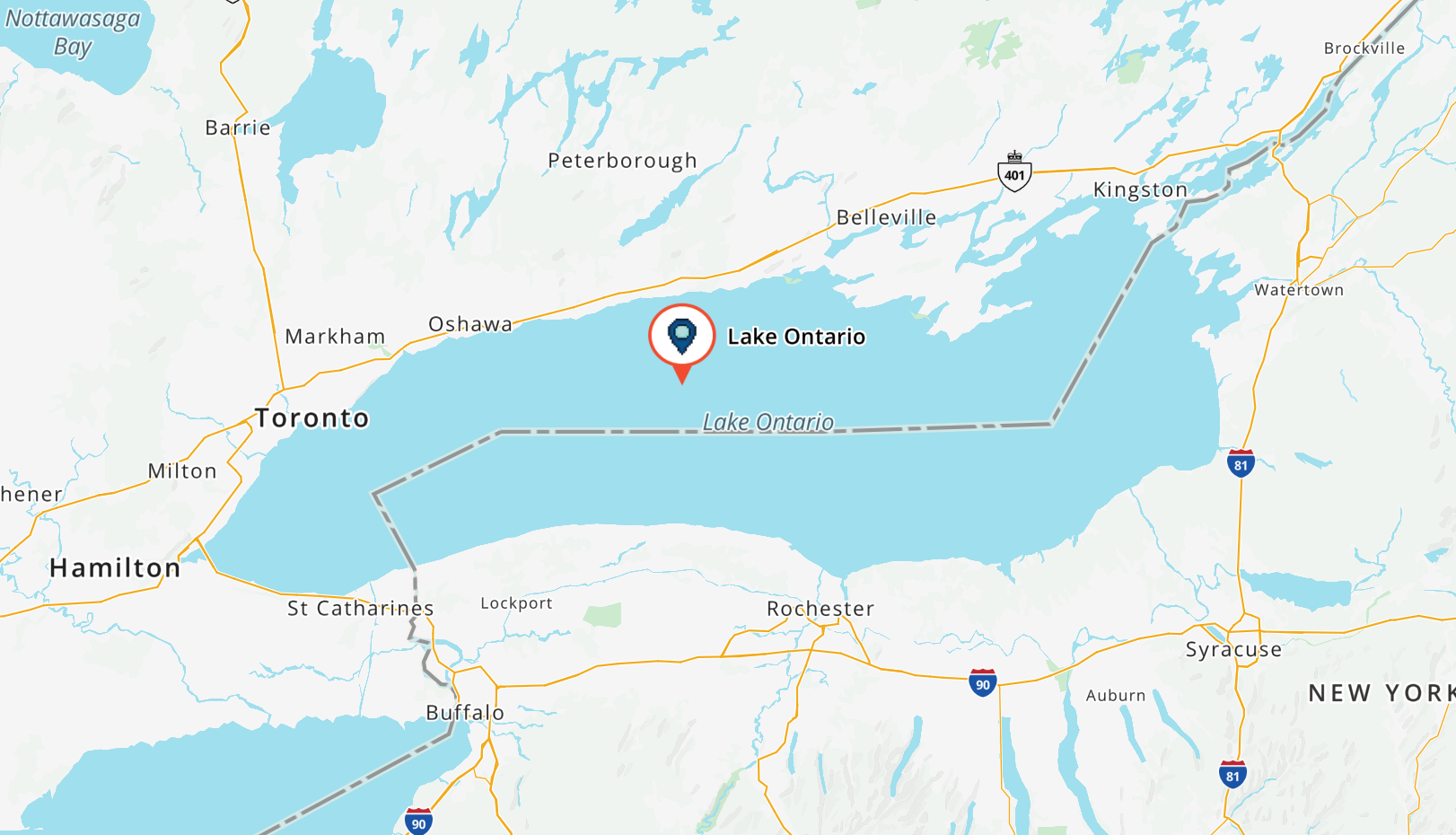
We all have every right to be upset. Google’s receiving plenty of flak over this move (as is Apple; Apple Maps now shows “Lake America,” reportedly after being pressured directly by Trump). I dislike Google’s and Apple’s choices, but I can’t personally fault them.
That said, Trump’s move is clearly meant to antagonize Canada during a volatile period in our relations. He’s throwing gasoline on a tariff fight that’s already creating uncertainty and suffering among vulnerable businesses and consumers on both sides of what was once an impeccably peaceful border. Google and Apple didn’t need to move so damned quickly. I wish they’d deferred the name change long enough for things to cool down a little. Doing so would have avoided creating the perception of handing one side a swift, validating victory.
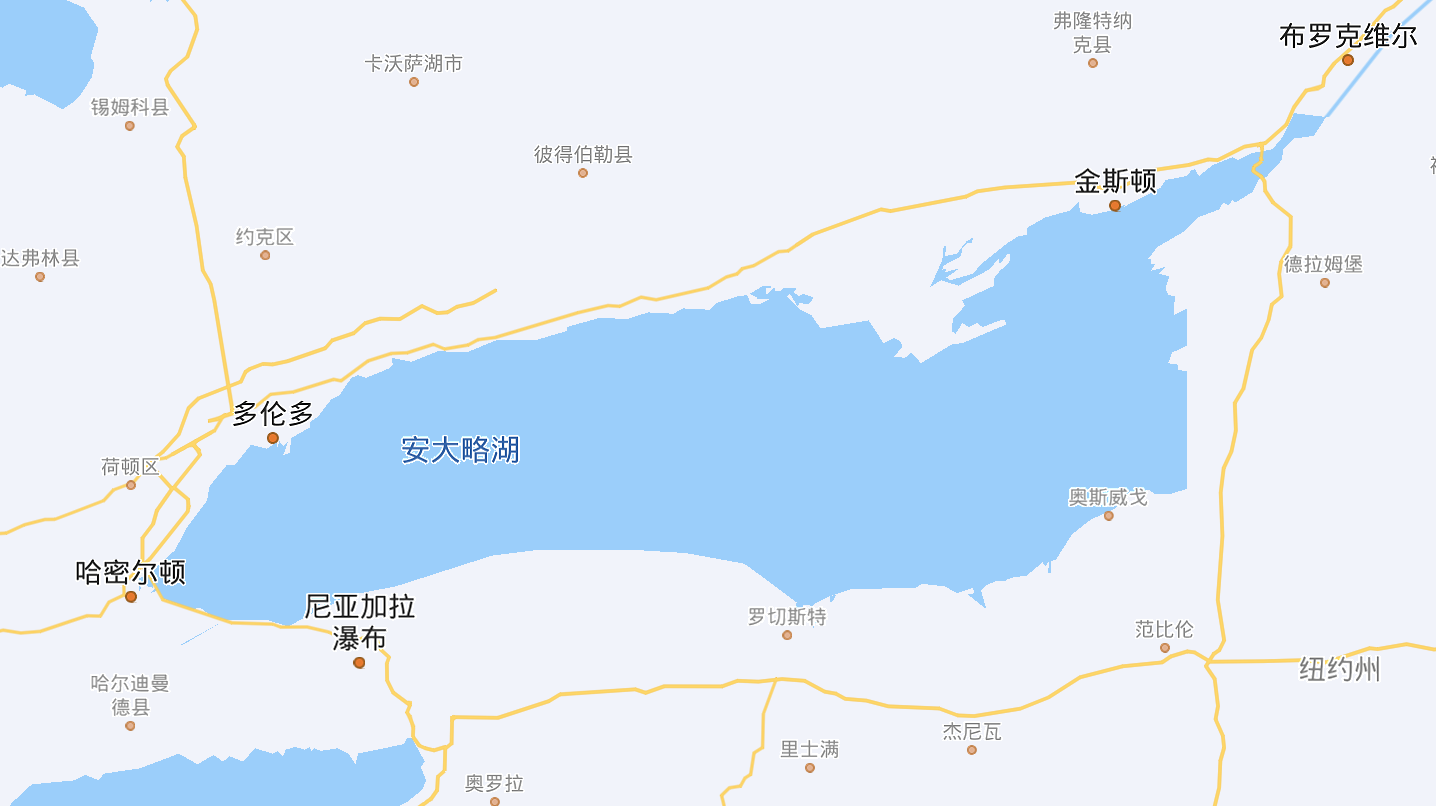
If it offends you to peep the new placename in Google Maps, remember that the US GNIS’ influence doesn’t extend beyond US borders. You can go into Google Maps’ settings and manually set your default country to something else.
So. Not for the first time, Trump has done a thing that has made Americans like me want to pretend to be from someplace else. At least the dude’s consistent.